

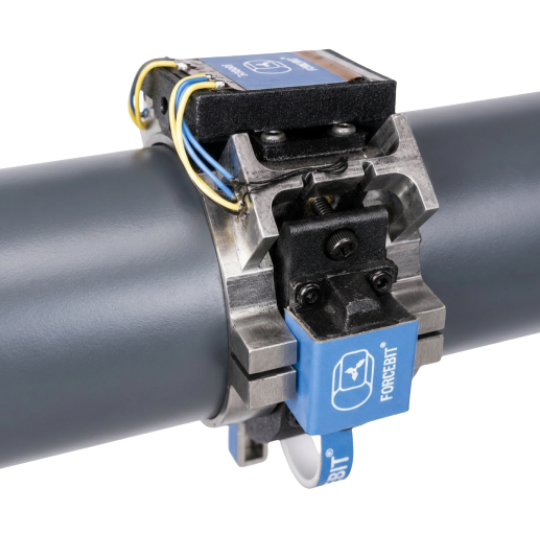
Wireless Torque sensor for rotary drives
- Plug & Play Design to measure torsion and bending loads
- Integrated angular displacement, velocity, and acceleration measurement
- Compact add-on design that does not require modifications to the existing system
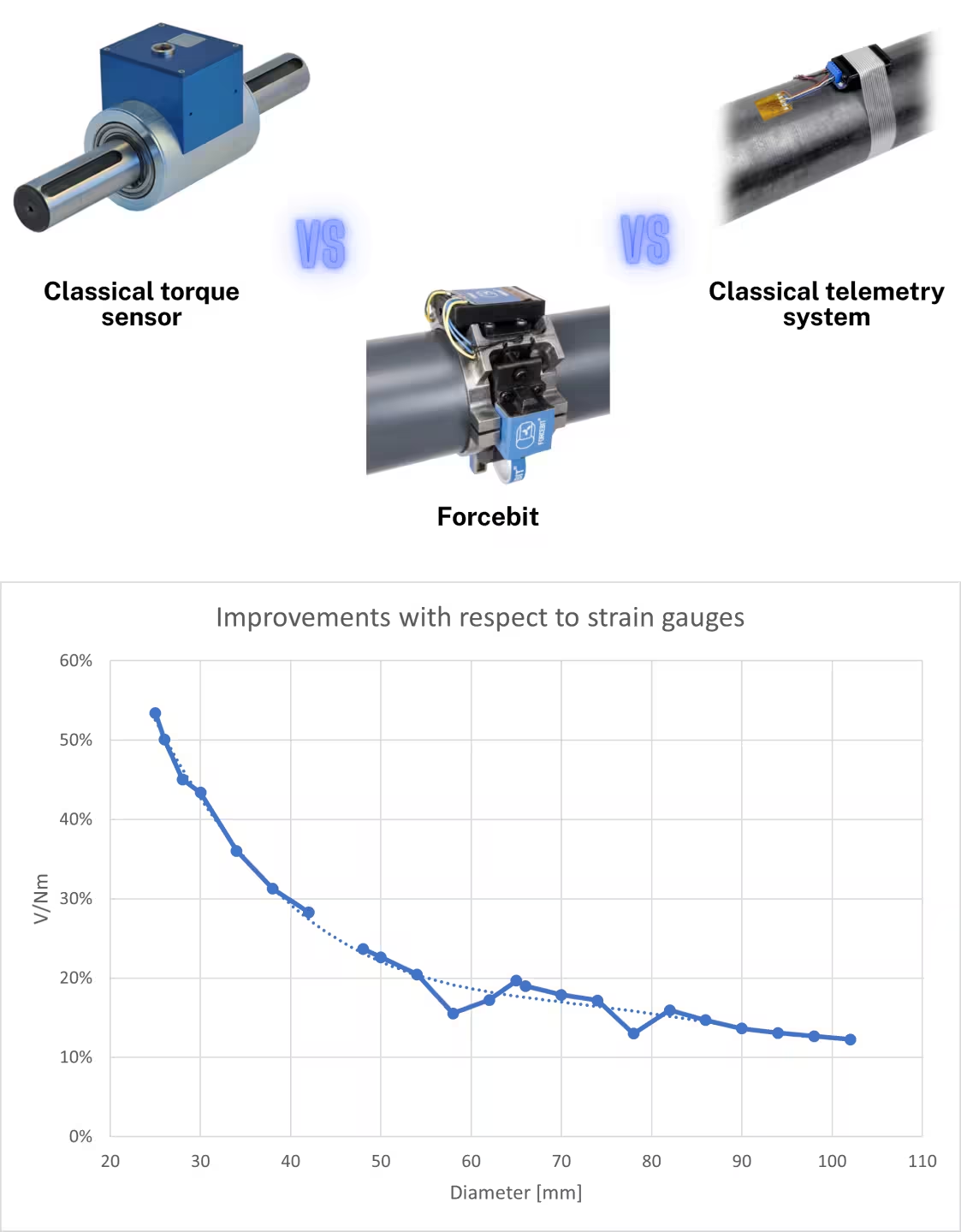
Why our add-on torque sensors deliver higher sensitivity than directly mounting strain gauges on a shaft?
→ Read the technical explanation in our blog post ←
How Are We Different from Classical Torque Sensors?
FORCEbit offers several key advantages over traditional torque sensors:
- Plug & Play Design: FORCEbit easily retrofits into existing drivetrains without system modifications such as couplings. Its compact form ensures seamless integration.
- Robustness Against Non-Torque Loads: As an add-on device that does not carry load, FORCEbit is inherently less sensitive to non-torque forces than conventional load-bearing torque sensors.
- No Mechanical Filter: Traditional torque sensors often require couplings to handle misalignment and non-torque loads, acting as mechanical filters that dampen higher-order signals. FORCEbit preserves the full load spectrum, capturing critical data with higher fidelity.
- Different accuracy-trade-off: As classical torque sensors are inductively powered, their electronics are optimized for accuracy rather than power consumption. Combined with the fact that the full load torque is going through the shaft, their final accuracy is higher.
How Are We Different from Classical Telemetry Solutions?
FORCEbit outperforms conventional telemetry systems (e.g. strain gauges on the shafts) in reliability, installation, and accuracy:
- Higher Reliability: Each unit is pre-calibrated and validated offline, ensuring potential errors are identified before installation. This guarantees excellent stability and repeatability in operation.
- Simplified Mounting: FORCEbit's design enables quick, straightforward installation without complex setup of surface preparation or gluing gauges – saving time and reducing integration risk.
- Superior Accuracy: By avoiding shaft-mounted strain gauges, FORCEbit achieves significantly higher precision and consistency across varying operating conditions. The improvement related to strain gauges is visible in the figure.
- Highly packaged: since our TELbit is tailored towards sensing on a rotation shaft, the solution is less generic overall. Contact Forcebit if a bespoke solution is needed.
Considerations
While FORCEbit’s add-on design provides substantial advantages, a few factors should be considered:
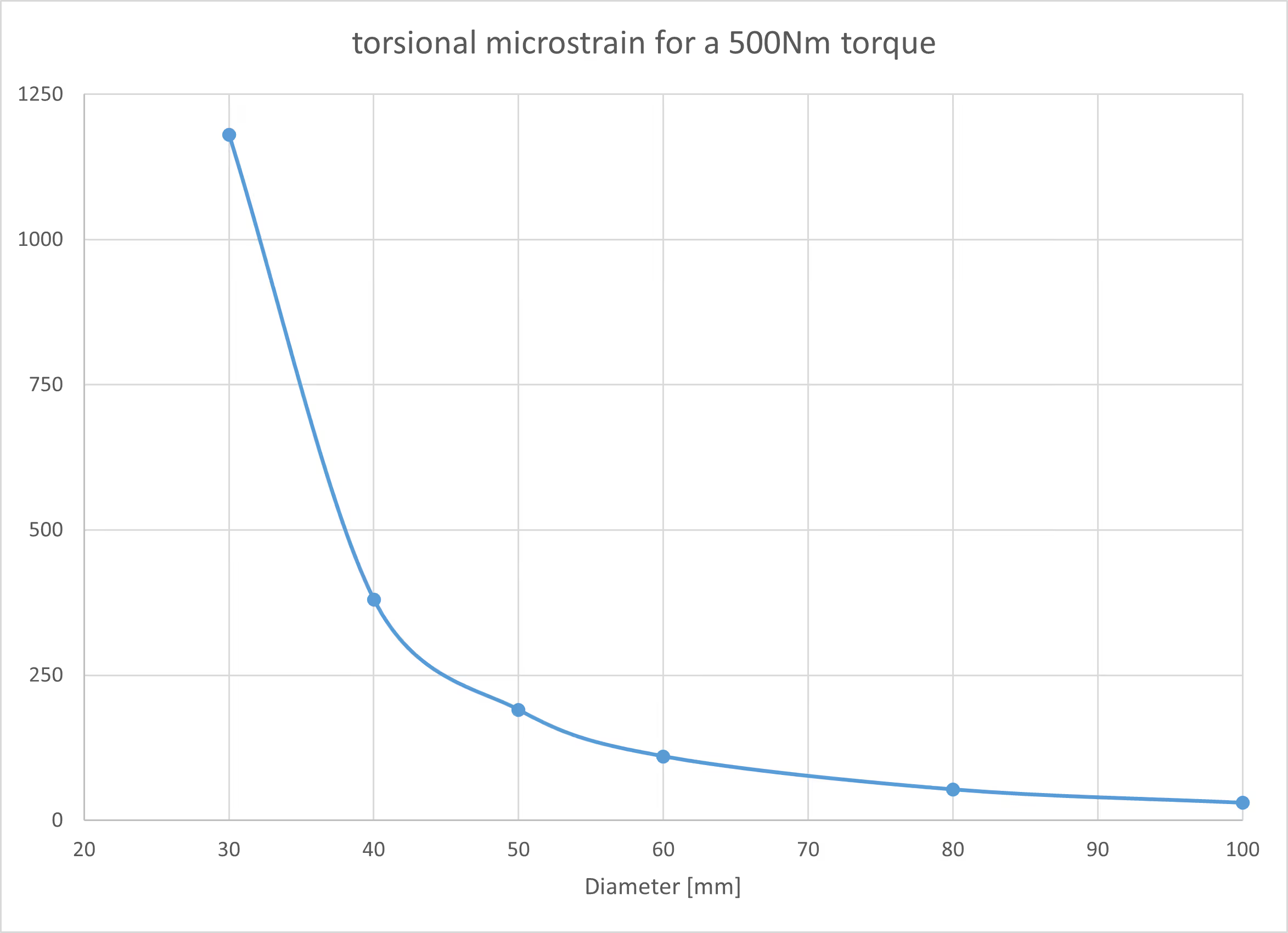
- Sensitivity Dependence on Shaft Design: Although more accurate than classical strain gauge systems, FORCEbit’s sensitivity still scales with the shaft’s diameter the same way as classical strain gauges do. This figure shows how increasing the diameter may reduce the strain and measurement sensitivity for a given torque—contact us to discuss your specific application.
- Battery Power Limitations: The wireless system is battery-powered, which limits operating time and introduces a small acquisition delay of a few milliseconds.
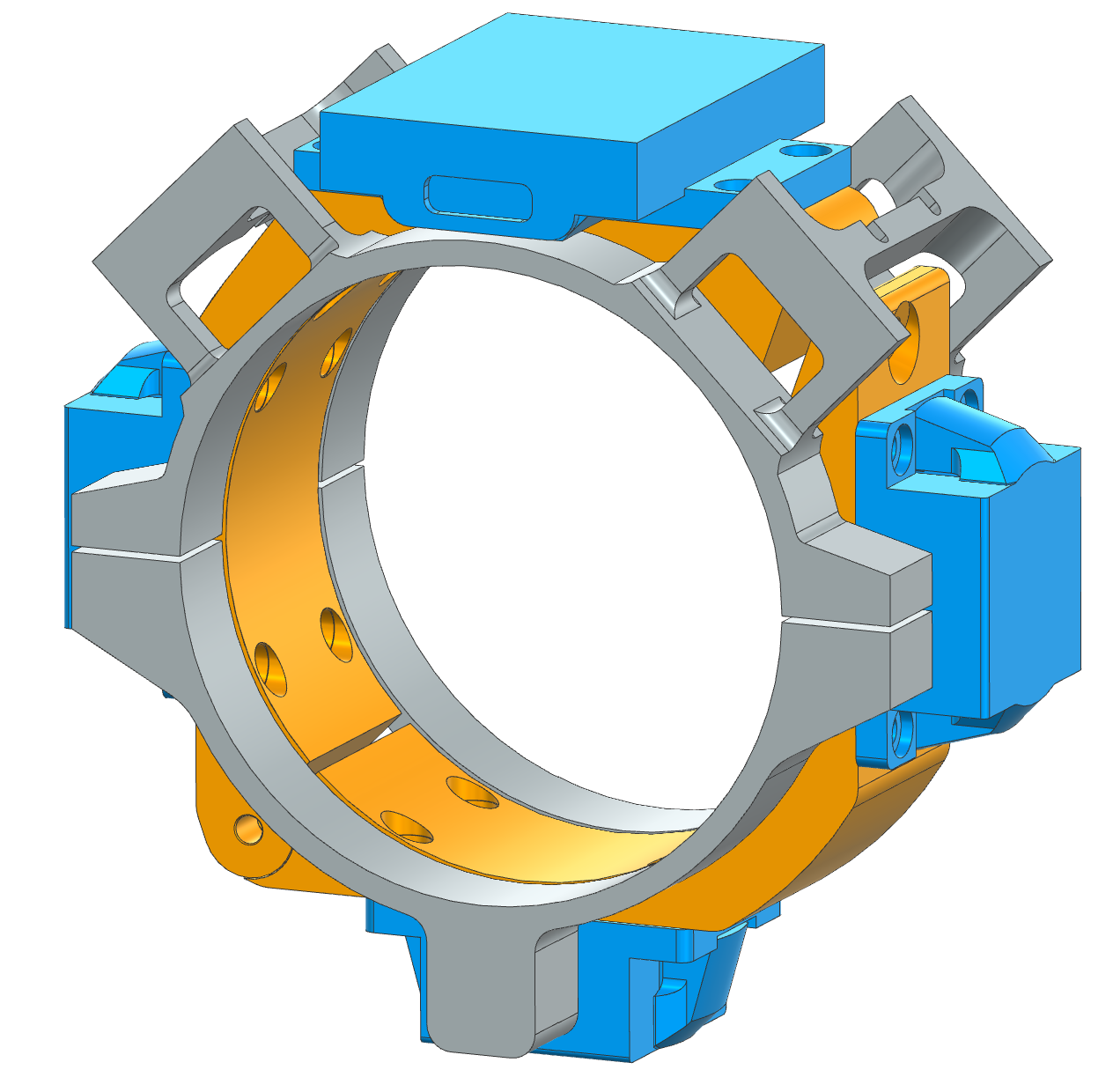
Download our FORCEbit CAD 3D Model
Integrate FORCEbit into your design before installation. Download the CAD 3D model to evaluate fit, clearances and mechanical integration directly within your own assembly.
✔ Check fit and available installation space
✔ Verify shaft clearance and surrounding components
✔ Simplify mechanical integration into your assembly
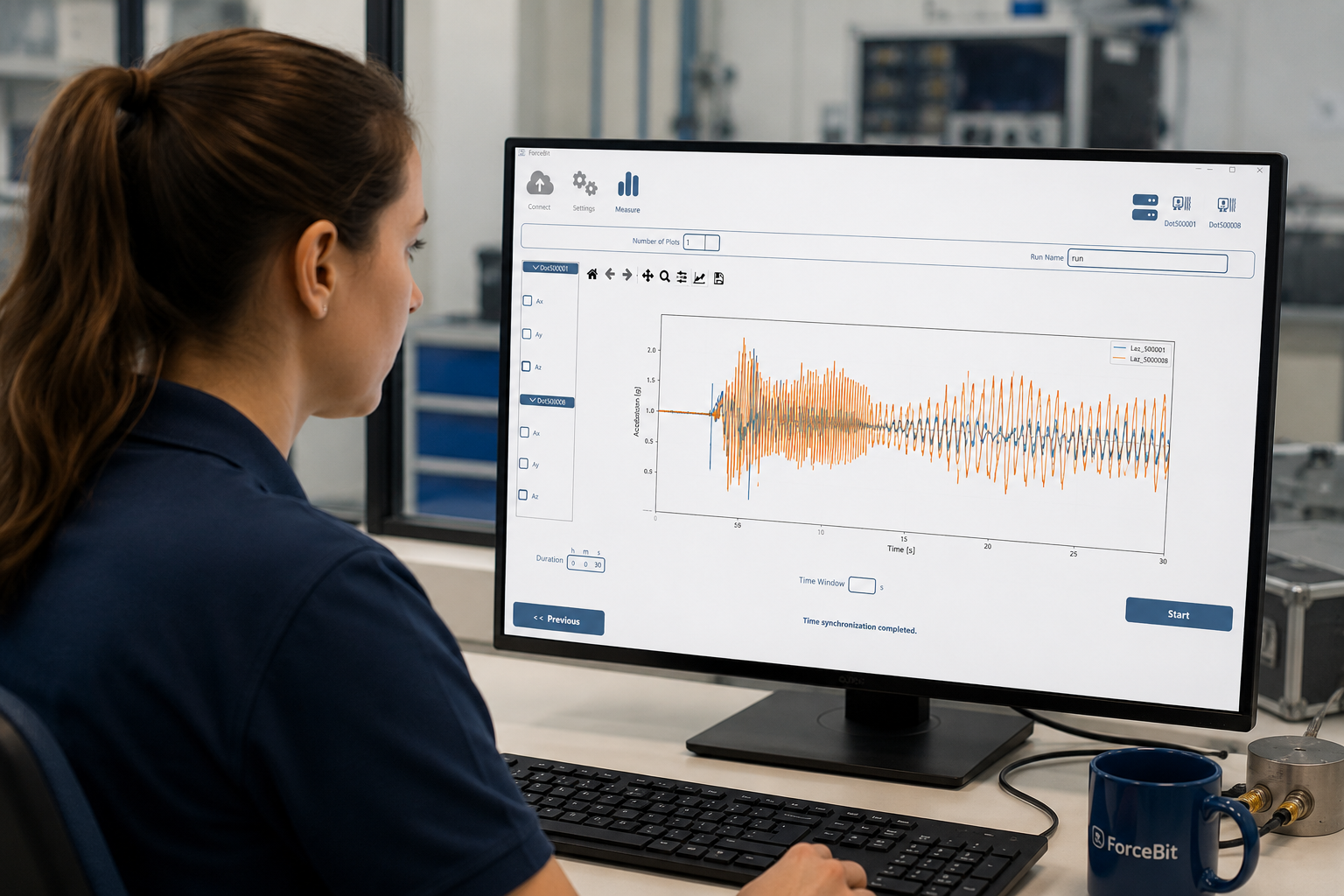
Why Do You Need One?
Prototyping and troubleshooting are often expensive and time-consuming. Each iteration can cost significant time and resources. With increasing demands for sustainability, performance, and efficiency in the machine and vehicle industries, it's more critical than ever to optimize your equipment to be faster, lighter, more energy-efficient, and durable.
FORCEbit helps you achieve these goals by providing essential measurements:
- Load Monitoring: Accurately measure torsional and bending loads on rotating shafts, allowing you to assess structural stress and performance limits.
- Angle Monitoring: Track angular position to understand how loading conditions depend on angle, offering deeper insights into your system's dynamic behavior.
FORCEbit is designed to streamline your prototyping and optimization processes, giving you the data you need to push your designs to their limits.
Choose precision, simplicity and convenience with our innovative sensor solution
Wireless, add-on sensor measuring torque
Sensor modularity
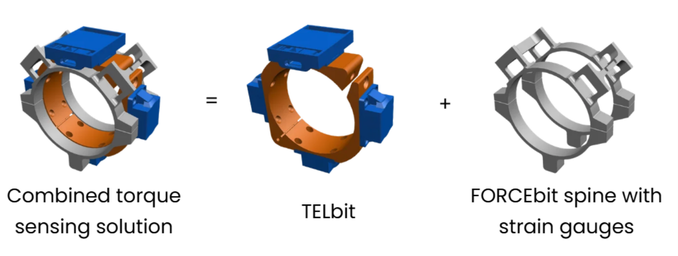
The FORCEbit sensor is a modular system that consists of a TELbit wireless telemetry system and an instrumented spine. The wireless telemetry system can be re-used within a certain diameter range while the spine is for a given diameter.
Installation procedure
A Forcebit sensor can be mounted easily onto a shaft. The collar is secured with a single bolt, while the FORCEbit spine is fastened using four bolts.
Get access to all Specifications


What the industry has to say about FORCEBIT
"The ease of installation really did surprise me. Though the selected location seemed very confined initially, the ACCbit sensor was mounted on the shaft and ready for use within a minute."
FAQs
Can’t find what you’re looking for? Reach out and we’ll get you a clear answer.
Understanding the FORCEbit Sensor
What is the working principle of the FORCEbit torque sensor?
The FORCEbit sensor acts as a high-sensitivity elastic element mounted parallel to the shaft. Shaft deformation under torque is measured using precision strain gauges, providing high sensitivity and low sensitivity to bolt clamping effects.
How is FORCEbit different from a classical torque sensor?
FORCEbit fits directly over the shaft, requires no couplings, adds almost no axial length, maintains drivetrain geometry, and captures high‑frequency torsional dynamics.
Is the FORCEbit robust against non-torque loads?
Yes, the non-torque loads are not in the transmission path of the sensor but are fully taken up by the shaft. For this reason, the sensor is also robust against torque overloading.
Installation & Mechanical Requirements
Do I need to dismantle the machine to install the FORCEbit sensor?
No. Installation requires only minimal axial space and can be completed in under 15 minutes if the shaft is accessible. No dismantling or redoing the shaft balancing is necessary.
Is the FORCEbit sensor built for a fixed shaft diameter?
Yes. To ensure proper clamping and measurement quality, each FORCEbit is tailored to a specific shaft diameter, with limited tolerance of 1%.
Does shaft material influence the FORCEbit measurement?
Yes. The internal spring element is made from the same material as the shaft to ensure matched thermal expansion. Inform us if the shaft material is not steel.
Performance, Accuracy & Calibration
What is the torque range and accuracy of the FORCEbit sensor?
Accuracy depends on shaft diameter, stiffness, and torque range. The design is customized based on customer input. FORCEbit generally achieves higher accuracy than bonded strain gauges.
Is FORCEbit suitable for durability or long‑duration testing?
Yes, but battery limitations apply. Intermittent testing allows long campaigns; continuous testing requires periodic USB‑C recharging. Inductive power solutions are under development.
How is the FORCEbit sensor calibrated?
Each FORCEbit is temperature‑compensated at factory premises. Full torque calibration requires applying a known load using a lever arm or calibrated inertia at user premises.
System Integration, Telemetry & Lifetime
Does FORCEbit include a telemetry system?
Two configurations are available: an integrated telemetry system (most compact) or a separate telemetry module that can be reused across shaft diameters.
What is the expected lifetime of the FORCEbit sensor?
The mechanical spring element is designed for infinite fatigue life.
Is the FORCEbit solution patented?
Yes, the FORCEbit technology and mechanical design are patented.
Still have questions?
Can’t find what you’re looking for? Reach out and we’ll get you a clear answer.