

Wireless telemetry for rotary drives
- A balanced, ready-to-use telemetry system for rotating shafts
- Configurable for strain gauges, Pt1000 temperature sensors and thermocouples, with application-specific gain settings
- Integrated solution with battery pack, wireless transmission & signal conditioning
- Modular design for a wide range of shafts
- Integrated angular displacement, velocity and acceleration measurement
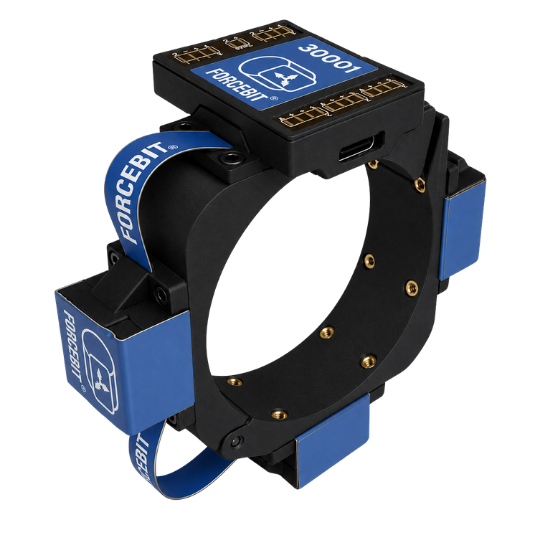

How are we different from other telemetry solutions?
TELbit is a versatile, ready-to-use telemetry system designed specifically for monitoring rotating shafts. Here’s how it sets itself apart from other telemetry systems, while still offering familiar high-end wireless transmission technology:
Key Similarities:
- Reliable Wireless Transmission: Like other high-end telemetry systems, TELbit ensures clear and reliable wireless communication, making it a dependable tool for various industries.
Key Differentiators:
- Plug & Play Design: TELbit offers a modular system with a custom clamping solution tailored for different shaft diameters. This removes the need for users to create their own balanced setup, saving time and effort, especially with the integration of a battery pack.
- Pre-Balanced for Safety: By offering a balanced solution from the start, TELbit significantly reduces the risk of equipment malfunction or failure at high angular velocities, improving safety.
- Extended Autonomy with Rechargeable Batteries: Telbit integrates a battery pack matched to the telemetry system for extended autonomy. The rechargeable battery system uses a USB-C cable, allowing for hassle-free charging without the need for disassembly, maximizing uptime.
Why Do You Need One?
Prototyping and troubleshooting can be both time-consuming and expensive. Every additional iteration increases development time and cost. With the increasing demands for sustainability and high performance in the machine and vehicle industries, your equipment needs to be optimized in every aspect—faster, lighter, more energy-efficient, and durable.
TELbit addresses this by providing critical measurements:
- Strain Monitoring: Measuring torsional and bending loads on rotating shafts through strain sensors allows you to assess performance limits and structural stress.
- Temperature Monitoring: Keeping track of the temperature on rotating drives helps in predicting component wear and failure, as rising temperatures can indicate excessive wear.
If sensor mounting is a challenge, TELbit offers the FORCEbit solution, which simplifies strain sensor installation, making it easier and more effective to gather crucial performance data.

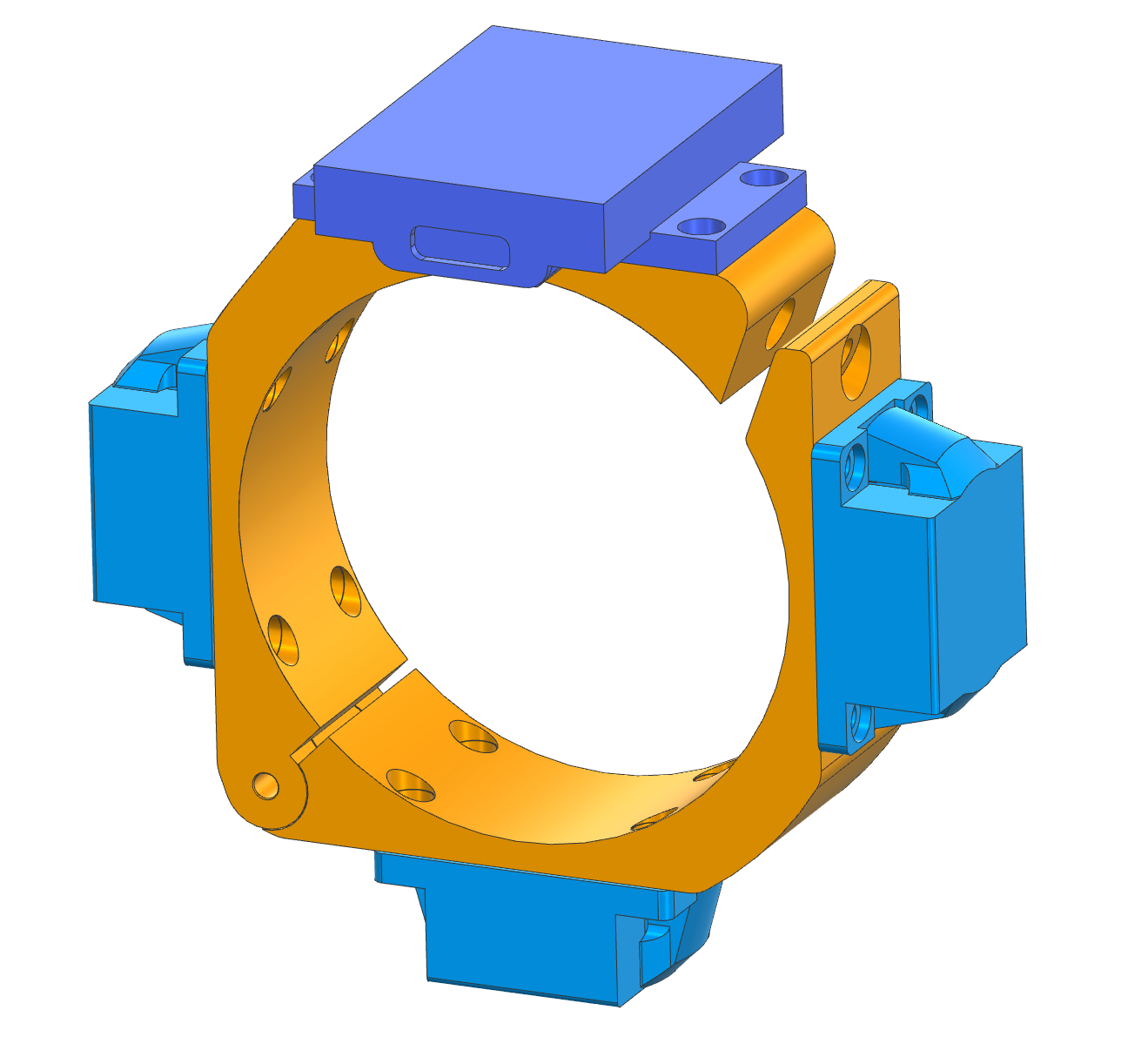
Download our TELbit CAD 3D Model
Integrate TELbit into your design before installation. Download the CAD 3D model to evaluate fit, clearances and mechanical integration directly within your own assembly.
✔ Check fit and available installation space
✔ Verify shaft clearance and surrounding components
✔ Simplify mechanical integration into your assembly
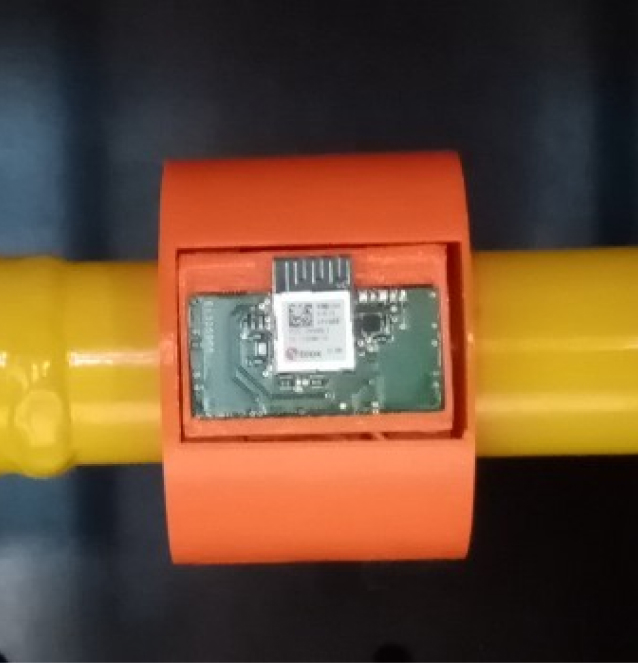
Choose precision, simplicity and convenience with our innovative sensor solution
Wireless telemetry system for rotary drives
Sensor modularity
The sensor is available in different versions to cover specific diameter ranges. Within the range, the modules can be re-used and only the collar needs to be re-ordered. For every purchase, additional collars can be bought on request.
Installation procedure
A TELbit sensor can be easily mounted to the shaft using a single bolt without dismantling the shaft. After installation, the integrated rotational measurements can be calibrated by rotating the system through a suitable speed and acceleration profile. Strain and temperature channels require a separate calibration against an appropriate reference.
Get access to all Specifications


What the industry has to say about FORCEBIT
"The ease of installation really did surprise me. Though the selected location seemed very confined initially, the sensor was mounted on the shaft and ready for use within a minute."
FAQs
Can’t find what you’re looking for? Reach out and we’ll get you a clear answer.
Working Principle & Sensor Compatibility
What does TELbit measure?
TELbit measures strain and temperature on rotating components. Strain is measured using strain gauges connected as a Wheatstone bridge. Temperature can be measured using either a Pt1000 sensor in a Wheatstone-bridge configuration or a thermocouple.
Like ACCbit, TELbit also measures angular position, rotational velocity and angular acceleration. These synchronized rotational measurements allow strain and temperature data to be related directly to the angular position and operating speed of the shaft.
What is the difference between TELbit and FORCEbit?
TELbit combines the battery pack, telemetry electronics, and protective housing into a single compact unit. This eliminates bulky inductive power loops and enables fast installation on a wide range of rotating machinery.
TELbit is a wireless telemetry system for applications where strain gauges or temperature sensors are installed directly on a rotating shaft. It acquires the sensor signals and transmits them wirelessly to the FORCEBIT Gateway.
FORCEbit combines TELbit telemetry with a dedicated mechanical structure on which strain gauges are already installed. This complete sensor assembly measures torque—and bending on request—without requiring the user to bond strain gauges directly to the shaft.
Choose TELbit if you want to measure sensors installed directly on the shaft. Choose FORCEbit if you want to measure torque without installing strain gauges yourself.
Which sensors and measurement channels does TELbit support?
TELbit supports full-bridge strain gauges, Pt1000 temperature sensors and thermocouples. The standard configuration includes five full-bridge strain-gauge channels and one Pt1000 temperature channel, with a standard strain-channel gain of 1000.
Other combinations of strain, Pt1000 and thermocouple channels, as well as different gain values, can be provided on request. Contact us to confirm the most suitable configuration for your sensors and expected measurement range.
Which strain-gauge bridge configurations and resistances does TELbit support?
TELbit is designed for full Wheatstone-bridge configurations. We recommend using strain-gauge bridges with a resistance of 1 kΩ or 5 kΩ.
Quarter-bridge and half-bridge configurations can also be supported by adding an intermediate adapter PCB that completes the Wheatstone bridge before it is connected to TELbit. Contact us to confirm the appropriate interface for your strain gauges.
Can TELbit be used for non-rotating applications?
The standard TELbit range is designed for installation on rotating shafts. However, the same telemetry and signal-conditioning technology can also be used in non-rotating applications.
On request, we can provide a customized configuration with a different housing, sensor interface or mechanical integration. We have already developed similar customized solutions for several applications.
Installation, Mechanical Design & Safety
Do I need to dismantle the machine or shaft to install TELbit?
No. TELbit uses the same split-collar mounting principle as ACCbit and can be clamped directly around a compatible shaft using a single bolt. The shaft does not need to be disconnected or removed from the drivetrain.
When the shaft is accessible, it only takes a few minutes. The strain gauges or temperature sensors must still be installed and connected separately.
Which shaft diameters are compatible with TELbit?
TELbit models are available for shaft diameters ranging from approximately 25 to 210 mm. Each TELbit module typically covers a diameter range of approximately 30 mm, within which only the collar needs to be changed.
Refer to the TELbit diameter table or contact us with your shaft dimensions to confirm the appropriate module and collar configuration.
Can TELbit be reused on another shaft?
Yes. TELbit consists of reusable electronic modules and an interchangeable collar. Within the supported diameter range of a TELbit module, the system can be transferred to another shaft by installing the appropriate collar.
Strain gauges or temperature sensors must be installed again on the new shaft, and the complete measurement chain must be recalibrated.
Does TELbit need to be balanced after installation?
No. TELbit and its individual modules are designed as a balanced assembly, so no additional balancing procedure is normally required after installation.
The overall mass is also very low, making the additional inertia negligible compared with the inertia of most rotating systems. The modules must nevertheless be installed correctly using the specified collar and fastening procedure.
Is TELbit safe to use on a rotating shaft?
Yes, provided that it is installed correctly and operated within the maximum allowable speed for the relevant shaft diameter.
The mechanical design is verified above the published operating range to provide an additional safety margin. Normal rotating-machine safety procedures, installation checks and appropriate machine guarding remain mandatory.
Calibration, Accuracy & Sampling
Does TELbit provide calibrated strain, temperature or torque values?
TELbit can provide both raw sensor data and calibrated measurement data. The initial sensor output is a raw digital value expressed in counts and must be calibrated to convert it into the required engineering unit.
Strain channels can be calibrated using a known reference. When strain measurements are used to determine torque, a mechanical calibration using a known reference torque is required. Temperature-channel gain and offset must be calibrated using a known reference temperature.
How can I configure and calibrate the TELbit measurement channels?
TELbit provides electronic gain and offset settings to zero the Wheatstone bridges and adapt each channel to the expected measurement range. An additional numerical gain and offset can then be applied to convert the signal into the required engineering quantity.
Each channel has an electronic cut-off frequency of 4 kHz. Additional numerical filtering can be selected in the user interface when required. Both the raw sensor data and the calibrated measurement data can be stored and exported.
What is the measurement resolution and accuracy of TELbit?
TELbit uses a 12-bit analogue-to-digital converter. At the standard amplifier gain of 1000, the instrumentation amplifier has a typical gain error of approximately ±0.04%, a maximum gain error of ±0.15% and a typical gain nonlinearity of 5 ppm. Its typical gain drift is approximately 10 ppm/°C.
These electronic specifications do not represent the accuracy of the complete measurement chain. In most applications, the sensor, its installation and the calibration method are the main sources of uncertainty.
For the best results, the electronic gain should be selected for the expected strain or temperature range, after which the complete measurement chain should be calibrated against an appropriate reference. Contact FORCEBIT to determine the optimal gain and calibration method for your application.
Are all TELbit channels sampled simultaneously?
The channels are sampled sequentially with a fixed and known time interval between them. This interval depends directly on the selected sampling rate.
Depending on the sampling rate, multiple measurements are internally averaged. This reduces noise and improves the effective measurement resolution.
Are strain and temperature measurements synchronized with the rotational measurements?
Yes. The strain and temperature measurements are synchronized with TELbit’s angular-position, rotational-velocity and angular-acceleration measurements.
This allows measured strain, load and temperature variations to be related directly to the shaft’s angular position and operating condition.
Operating Limits, Power & Wireless Communication
Which sampling rates and bandwidth does TELbit support?
TELbit supports output sampling rates from 25 Hz up to 4 kHz. Each measurement channel has an electronic cut-off frequency of 4 kHz. Depending on the selected sampling rate, internal averaging and additional numerical filtering can be applied to reduce noise and adapt the signal to the dynamics of the application.
What is the maximum rotational speed of TELbit?
TELbit has the same diameter-dependent speed limits as ACCbit. The maximum measurable speed for angular position, rotational velocity and angular acceleration must be distinguished from the maximum mechanically allowable operating speed.
Both values depend on the shaft diameter. Refer to the speed-versus-diameter table in the technical specifications to verify the applicable limits for your configuration.
How long does the TELbit battery last?
TELbit provides approximately 50 hours of operation at a 4 kHz sampling rate. After this period, the integrated rechargeable battery must be recharged through the USB-C connection.
Actual autonomy can depend on the selected measurement and communication settings. Additional information about battery autonomy and charging is available in the relevant frequently asked questions on the ACCbit product page.
Can TELbit be used for long-term measurements?
For measurements exceeding the internal battery autonomy, TELbit can be powered through its USB-C connection using an external power bank. The power bank and cable must be securely integrated into the rotating setup, taking balancing, clearance and machine safety into account.
We are also developing an inductive-powering solution for applications requiring permanent operation. This solution is not currently available.
What is the wireless range of TELbit, and is a gateway required?
TELbit communicates wirelessly with the FORCEBIT Gateway using robust 2.4 GHz radio communication. The achievable range depends on the machine environment, and metal structures or electromagnetic interference may reduce communication performance.
A FORCEBIT Gateway is required to configure TELbit, receive the measurement data and transfer it to the acquisition software.
Pricing, Trial & Support
How much does a typical TELbit measurement setup cost?
A typical setup consists of one TELbit sensor and one FORCEBIT Gateway. The indicative price is €6,500 for TELbit and €1,500 for the gateway, resulting in a total system price of approximately €8,000. The FORCEBIT acquisition software is included with the gateway at no additional cost.
Each TELbit sensor is supplied with a collar for one specified shaft diameter. Additional collars can be purchased for €125 each.
Strain gauges, temperature sensors and their installation are not included in the standard price. These costs depend on the selected sensors and whether the installation is performed in-house or by an external specialist. FORCEBIT can help define or provide the appropriate sensor and installation solution on request.
Can I test or rent TELbit before purchasing it?
Yes. A measurement set consisting of one TELbit sensor and one FORCEBIT Gateway can be rented for one month for €500. Contact us to discuss availability and the options offered in your region.
Before arranging a rental, our engineers will review the shaft dimensions, rotational speed, selected strain or temperature sensors, available installation space and measurement objectives to confirm that TELbit is suitable for your application.
What technical support do you provide?
Our goal is to ensure that you can complete a successful measurement campaign. We can assist with TELbit configuration, sensor selection, bridge configuration, gain settings, calibration, filtering and preparation of the acquisition setup.
Strain-gauge and temperature-sensor installation is not included as standard, but installation support or a complete installation service can be discussed on request.
If you encounter a question or problem during the campaign, our engineers provide direct and personal support. If the measurement results are unexpected or unclear, we can review them with you, investigate the possible causes and determine the most appropriate next step for your setup.
How does TELbit compare with slip rings and inductively powered telemetry systems?
TELbit is battery powered and transmits its measurement data wirelessly. Unlike slip rings and inductively powered systems, it does not require a stationary power-transfer component or a precisely aligned external reference around the shaft.
Inductively powered telemetry systems are well suited to very long measurements and permanent monitoring because they do not depend on a battery. However, they require stationary hardware around the shaft, generate an additional electromagnetic field and can occupy considerable installation space.
Slip rings must transfer power and data across rotating electrical contacts. These contacts are subject to wear and may introduce electrical noise. Digital data transmission can reduce this sensitivity, but the allowable rotational speed depends strongly on the slip-ring design and is often more restrictive than for a contactless wireless system.. We generally recommend slip rings as a power-transfer solution only for lower-speed applications.
TELbit provides a compact solution for high-speed and confined installations, but its operating time is limited by the battery capacity. The most suitable technology therefore depends on the required speed, measurement duration, available space and need for permanent operation.
Still have questions?
Can’t find what you’re looking for? Reach out and we’ll get you a clear answer.