

Lorem ipsum dolor sit amet, consectetur adipiscing elit. Suspendisse varius enim in eros elementum tristique. Duis cursus, mi quis viverra ornare, eros dolor interdum nulla, ut commodo diam libero vitae erat. Aenean faucibus nibh et justo cursus id rutrum lorem imperdiet. Nunc ut sem vitae risus tristique posuere.
Lorem ipsum dolor sit amet, consectetur adipiscing elit. Suspendisse varius enim in eros elementum tristique. Duis cursus, mi quis viverra ornare, eros dolor interdum nulla
We previously tested our high-resolution encoder ACCbit at Siemens’ facilities, and this second visit focused specifically on analysing the high-frequency content of the signal. Our goal was to validate recent improvements on the test bench—and the results exceeded expectations.
Three Key Improvements
- Faster, Simpler Installation
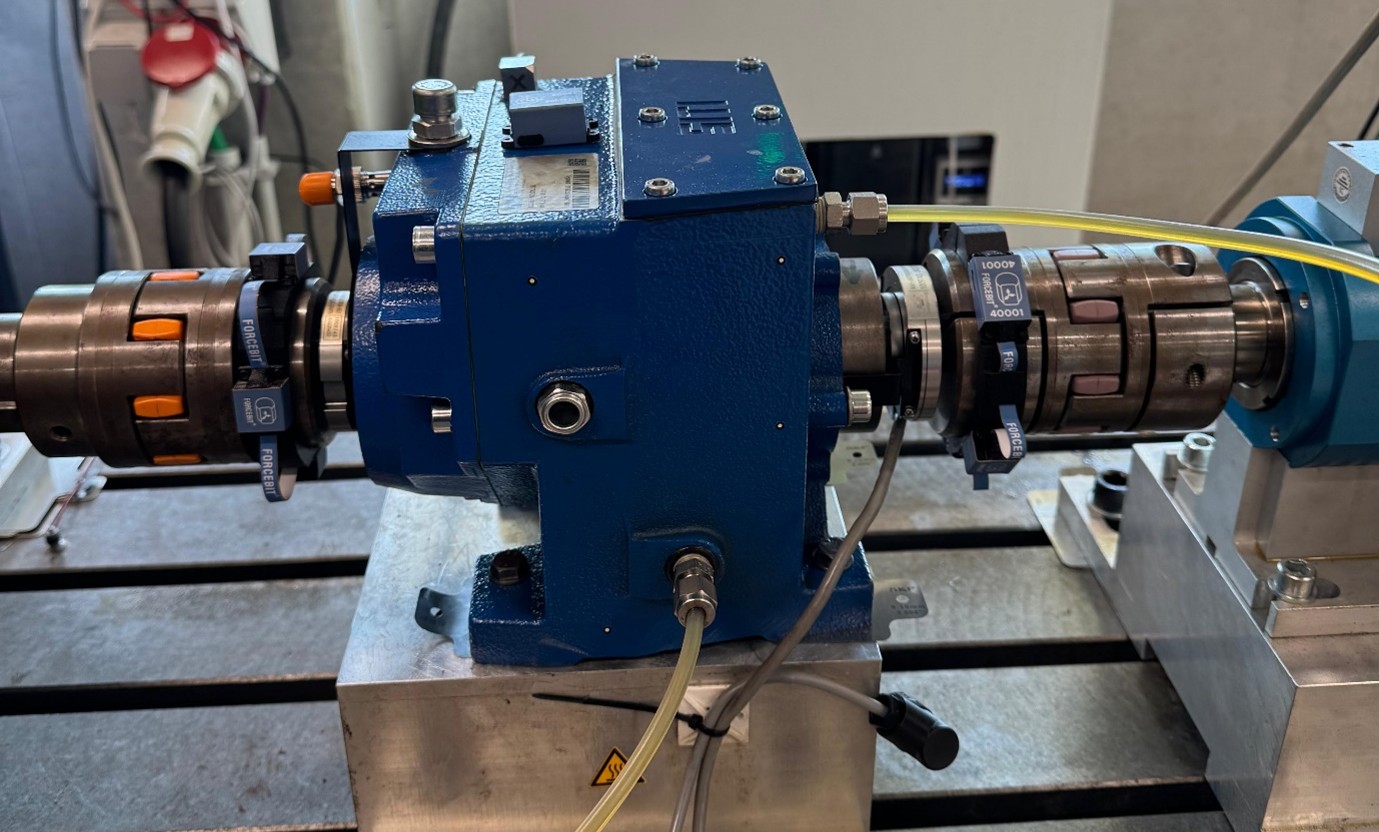
Thanks to our new collar design, we were able to install the sensor in a highly space-constrained area in under three minutes. A single M3 bolt now secures the assembly, making the process both faster and more reliable.
- More Flexible Calibration Procedure
Our angle, velocity, and acceleration estimation relies on a Kalman filter with parameters identified during a calibration run. Previously, the calibration required a stepwise speed profile. This constraint has now been removed: any sufficiently dynamic speed profile can be used, significantly relaxing calibration requirements and improving usability.
- Improved High-Frequency Dynamic Capture
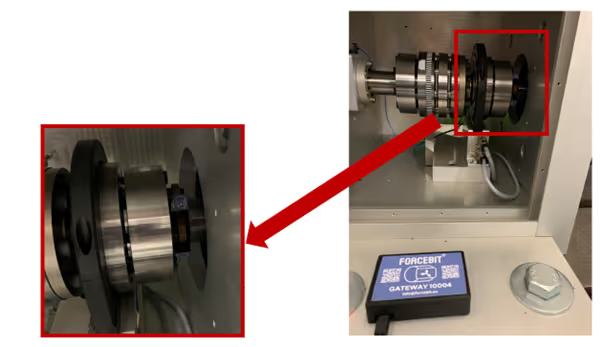
We refined our estimation algorithm to better capture high-frequency dynamics, which is essential for identifying torsional resonances and performing accurate order tracking. The picture below shows the sensor installation on the right side.
Validation Through Cross-Comparison
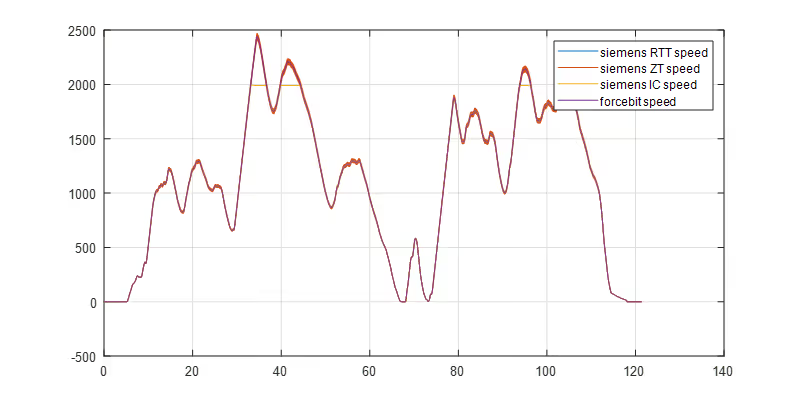
We validated the speed profile using the setup’s built-in encoders and achieved agreement within 0.1%, confirming the robustness of our improvements.
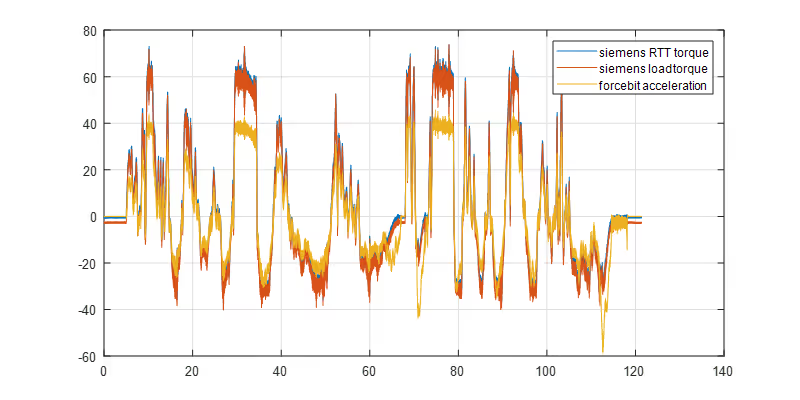
Next, we compared the acceleration signal with the load torque on both the driver and load sides. We observed that the torque is predominantly inertia-driven, and that the acceleration and torque profiles exhibit highly similar dynamics.
Integration With TestLab and Advanced Spectral Analysis
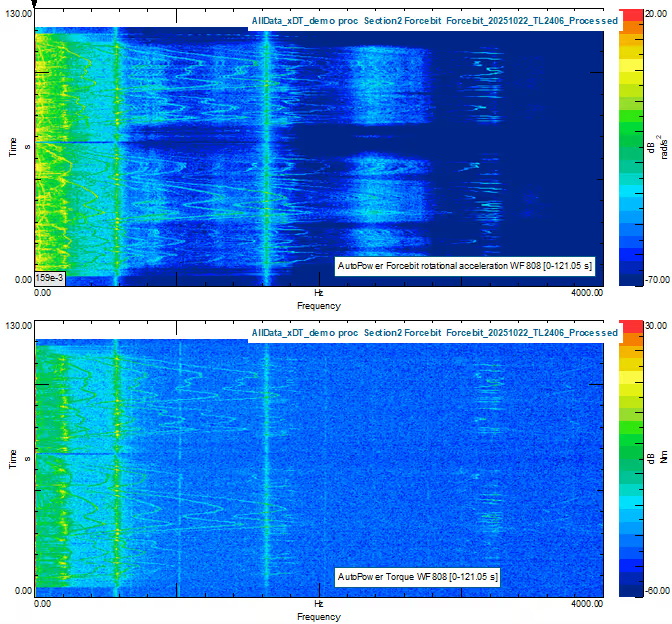
We imported the results into TestLab to generate waterfall diagrams and to compare the torque spectra with the Forcebit rotational acceleration. These analyses clearly showed that system orders and eigenfrequencies can be accurately captured.
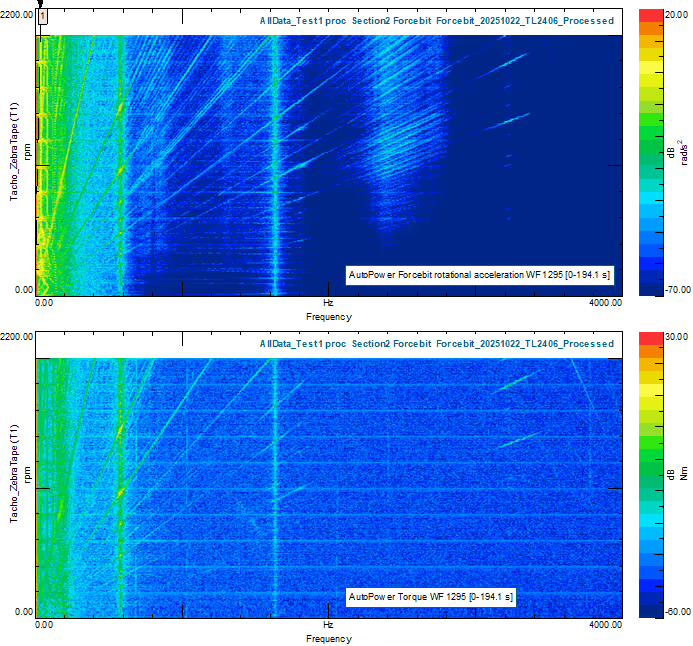
In another stepped-speed test, the spectral content of the system’s orders became even clearer. These findings confirm that the ACCbit is a strong alternative to traditional torque measurements in scenarios where dynamic behavior—rather than absolute torque values—is the primary focus.
Because the ACCbit also provides angular displacement, angle-dependent excitations can be detected as well, further expanding its diagnostic capabilities.
.jpeg)