

Lorem ipsum dolor sit amet, consectetur adipiscing elit. Suspendisse varius enim in eros elementum tristique. Duis cursus, mi quis viverra ornare, eros dolor interdum nulla, ut commodo diam libero vitae erat. Aenean faucibus nibh et justo cursus id rutrum lorem imperdiet. Nunc ut sem vitae risus tristique posuere.
Lorem ipsum dolor sit amet, consectetur adipiscing elit. Suspendisse varius enim in eros elementum tristique. Duis cursus, mi quis viverra ornare, eros dolor interdum nulla
Last week, we carried out a benchmark vibration analysis together with a leading Tier 1 supplier, using our wireless accelerometer DOT sensors during a real vehicle test campaign at an Automotive Proving Ground. The goal was simple but ambitious:
Can a fast, wireless MEMS-based setup deliver vibration data comparable to high-end wired piezo sensors without the traditional instrumentation overhead?
Measuring vibration where it matters
To assess vibrations from both a driver experience and a vehicle dynamics perspective, we instrumented the vehicle at three key locations:
- Under the driver seat to capture close to what the driver actually feels,
- At the suspension, including the knuckle, and
- At the top mount to observe the dynamic behaviour of the suspension and vehicle body.
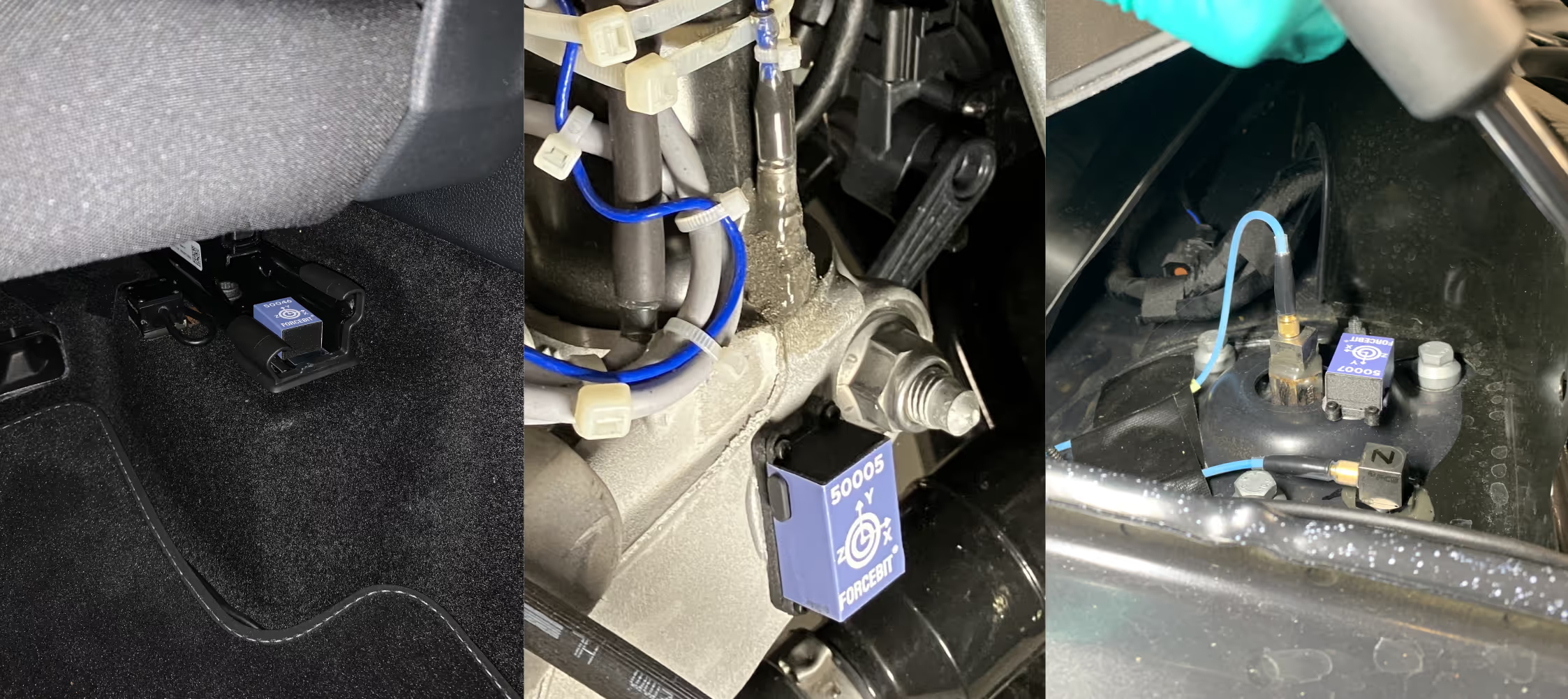
All DOT sensors were wireless and epoxy-bonded, resulting in a robust, shock-resistant installation suitable for real proving-ground conditions.
The result?
Full instrumentation, measurement, and data retrieval completed within a few hours, all in the same day. This is where the real advantage starts.
Benchmarking against piezo reference sensors
To validate performance, the DOT sensor data was benchmarked directly against the existing piezoelectric sensors already installed on the vehicle.
The FFT comparison tells a very clear story:
- Low-frequency behavior (< 1 Hz): The DOT sensor captures the dynamic behaviour up to DC whereas piezo-accelerometers start measuring above a certain frequency. Hence we see a discrepancy.
- Mid to high frequencies (1–120 Hz): Across this entire range, the FFT shows a near one-to-one correlation between the DOT sensor and the reference sensor. Peaks, noise floor, and overall spectral shape align remarkably well.
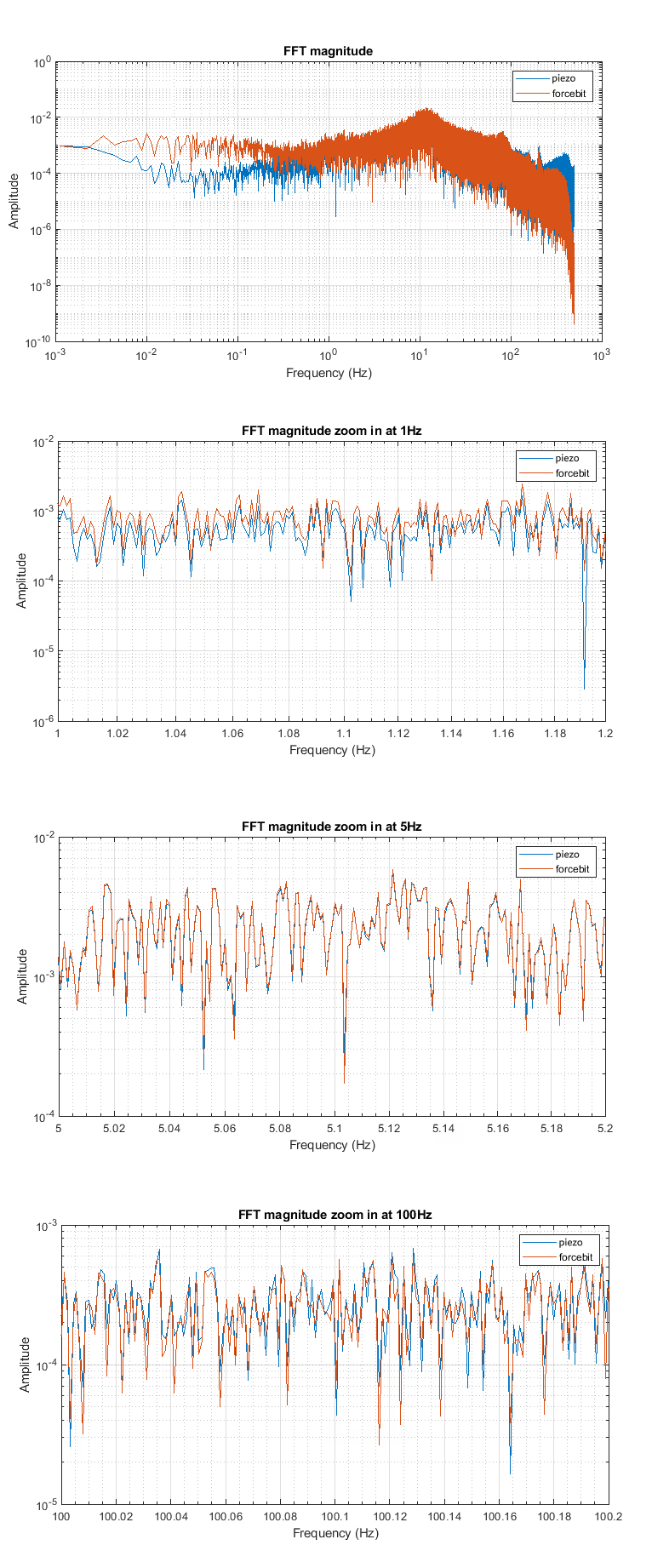
This confirms that, from an accuracy perspective, the DOT sensor is fully compatible with high-end analysis workflows.
Why it matters: speed changes everything
Traditional measurement campaigns are often limited not by sensor accuracy, but by time, complexity, and setup cost.
With wireless DOT sensors:
- No cabling through the vehicle
- No long installation cycles
- No test-day delays due to instrumentation issues
What typically takes days can now be done in hours — dramatically lowering the threshold to run measurements, benchmarks, or exploratory tests.
From insight to action - faster
This benchmark demonstrates something crucial: You don’t have to choose between speed and data quality.
By combining:
- Wireless MEMS sensors
- Robust epoxy mounting
- Accurate low-frequency performance
- Proven correlation with piezo references
engineering teams can move faster, test more often, and make decisions earlier in the development cycle. And that speed-up doesn’t just improve testing — it improves the entire engineering workflow.
.jpeg)