

Lorem ipsum dolor sit amet, consectetur adipiscing elit. Suspendisse varius enim in eros elementum tristique. Duis cursus, mi quis viverra ornare, eros dolor interdum nulla, ut commodo diam libero vitae erat. Aenean faucibus nibh et justo cursus id rutrum lorem imperdiet. Nunc ut sem vitae risus tristique posuere.
Lorem ipsum dolor sit amet, consectetur adipiscing elit. Suspendisse varius enim in eros elementum tristique. Duis cursus, mi quis viverra ornare, eros dolor interdum nulla
Demonstration on the LMSD Gearbox Test Bench
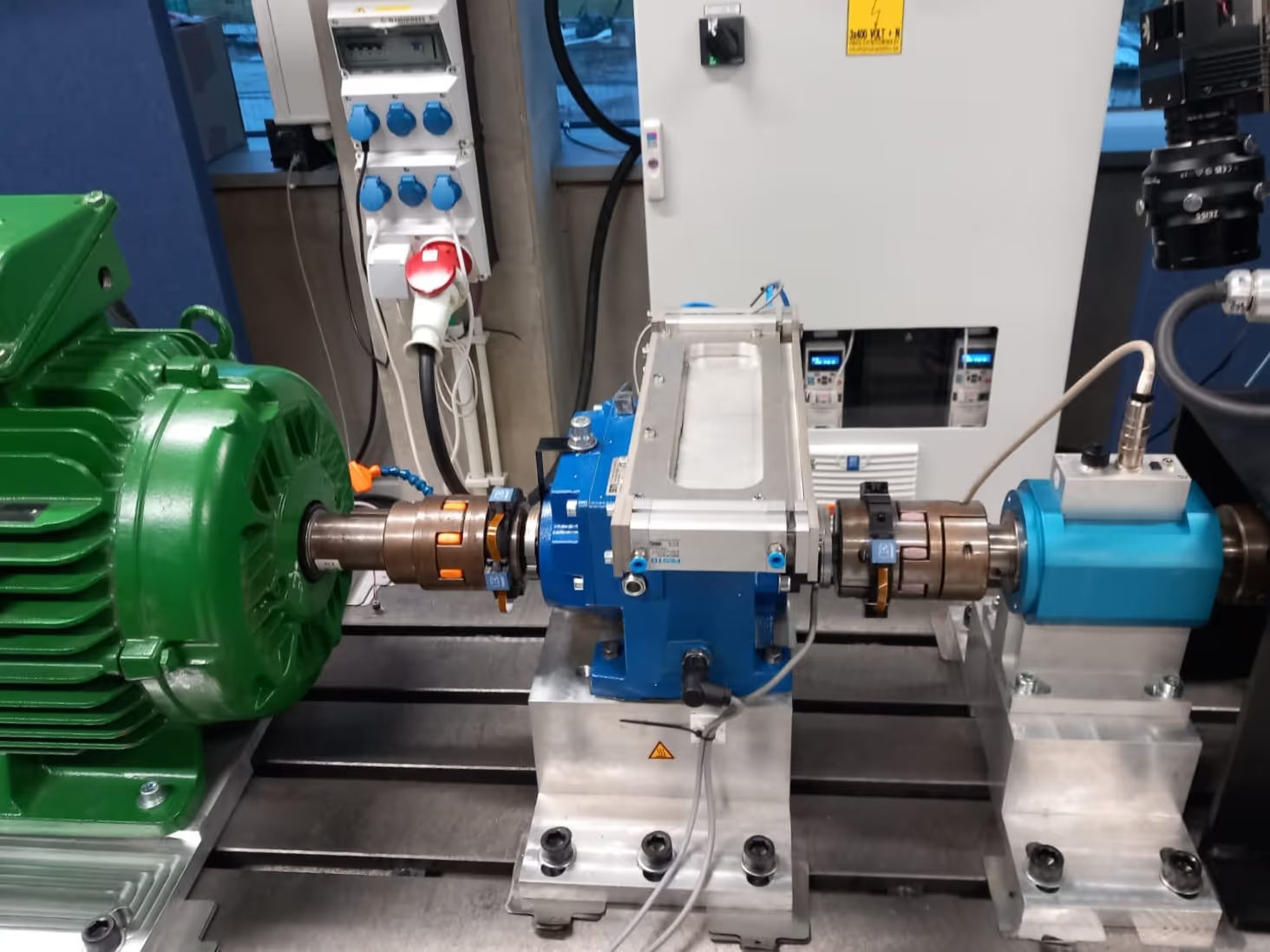
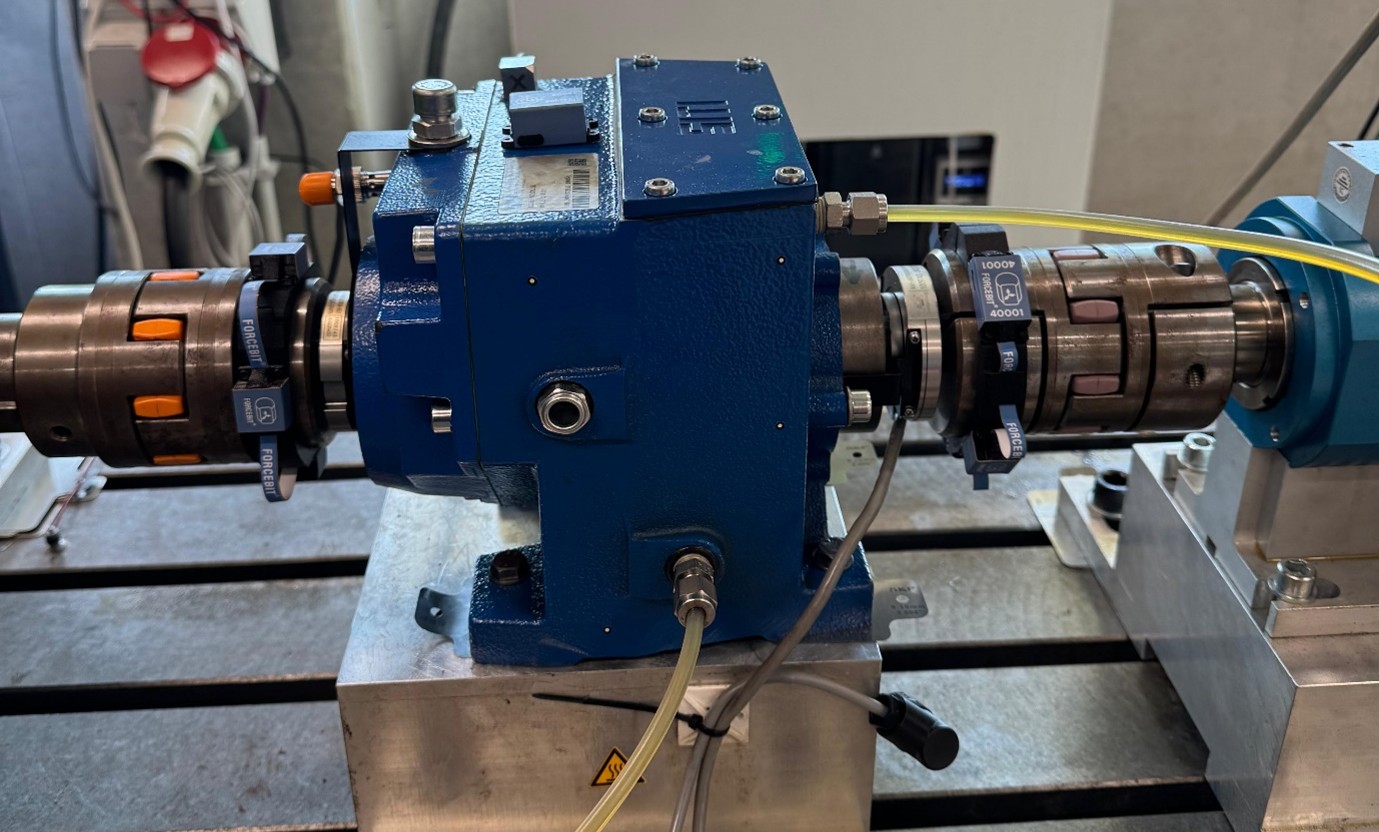
Recently, we performed an in-depth analysis within the Sound and Vibration research group at LMSD Leuven Mechatronic System Dynamics at KU Leuven. The focus of this study was one of their dedicated gearbox test benches, typically used for condition monitoring.
The goal of this experiment was clear:
to demonstrate how gearbox damage can be detected efficiently, elegantly, and at a very early stage, enabling true predictive maintenance strategies.
To achieve this goal, we deployed our ACCBIT high-resolution encoders on the test bench, and the results clearly showed where our solution makes a fundamental difference.
Installation in Minutes, Not Hours
One of the most striking outcomes of this demonstration was the installation speed. The complete encoder setup, mechanical mounting and readiness for measurement, was completed in less than 10 minutes. No complex alignment procedures, no precision fixtures, and no time-consuming calibration routines were required.
This extremely fast deployment immediately transforms the encoder into a practical troubleshooting tool:
- Ideal for test benches,
- Suitable for temporary diagnostics,
- Perfect for rapid experimental validation.
In environments where downtime, setup complexity or operator expertise are limiting factors, the instrumentation speed alone represents a major advantage.
No Perfect Alignment Required
Traditional high-precision motion sensing often demands exact positioning with respect to a fixed reference and careful sensor alignment. In practice, this is one of the biggest barriers to adoption. With ACCBIT, this constraint disappears. Thanks to an embedded self-calibration procedure, the system automatically:
- Learns how the sensor is mounted,
- Identifies mounting imperfections,
- Estimates the necessary correction parameters during measurement.
This allows us to apply Kalman-filter-based estimation techniques to derive angular position, velocity and acceleration with high accuracy, even when the mounting is not geometrically perfect.
In other words:
Fast mounting does not come at the cost of data quality.
Rich, High-Quality Data for Feature Extraction
Once installed, the real strength of the solution becomes apparent: the richness of the measured data. From a single encoder setup, we simultaneously obtain:
- High-resolution angular position,
- Clean angular velocity,
- High-fidelity angular acceleration.
This multi-domain information is crucial for advanced feature extraction in gearbox diagnostics.
Why It Matters?
Many gearbox faults, such as cracks, impacts, localized tooth damage, are angle-dependent phenomena. By analyzing signals as a function of angular position rather than time alone, these defects become significantly easier to detect and interpret. In addition:
- Velocity and acceleration signals contain detailed information about orders and eigenfrequencies.
- Gear mesh frequencies and their sidebands become clearly visible.
- Variations caused by manufacturing tolerances, wear, or damage are revealed.
This creates an exceptionally information-rich signal space for condition monitoring and fault diagnosis.
Comparing Shafts Through Gear Ratio Scaling
During the analysis, angular position, velocity, and acceleration were first evaluated in a global view, followed by a detailed zoom-in.
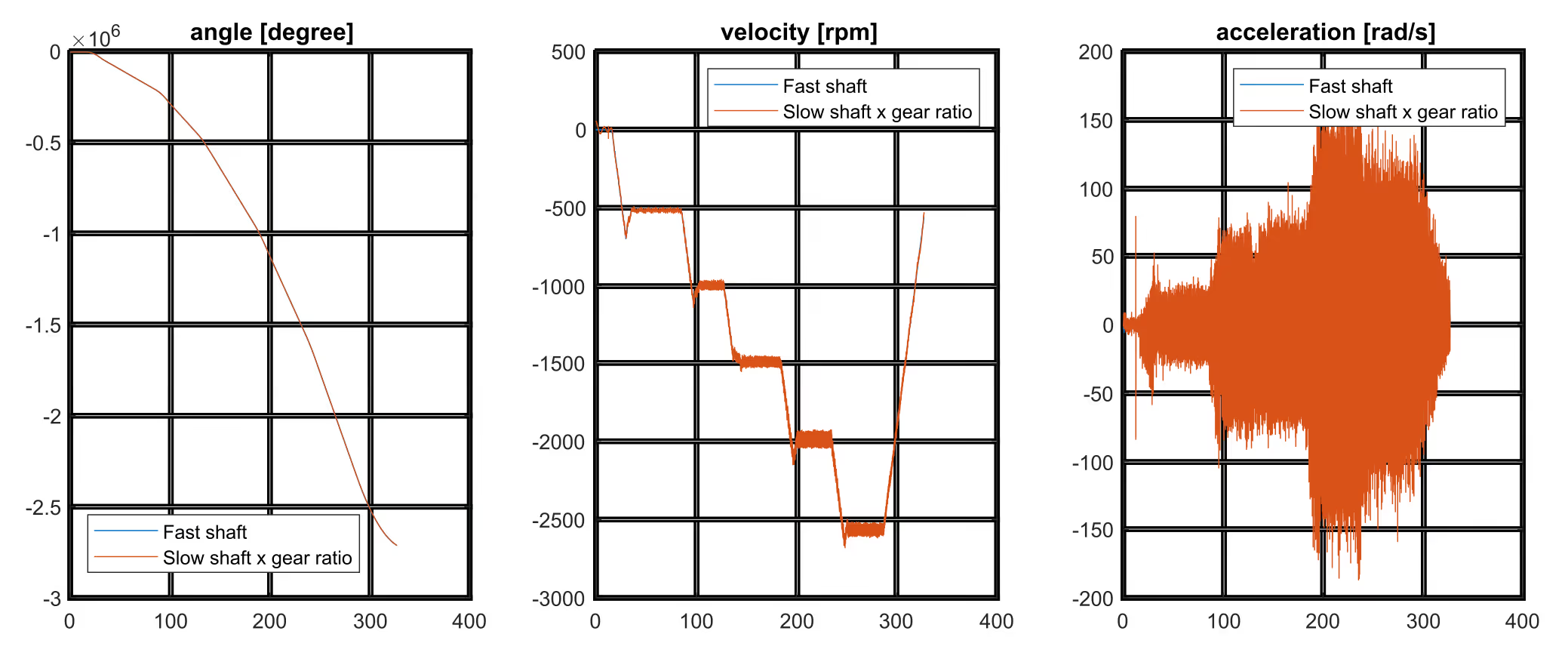
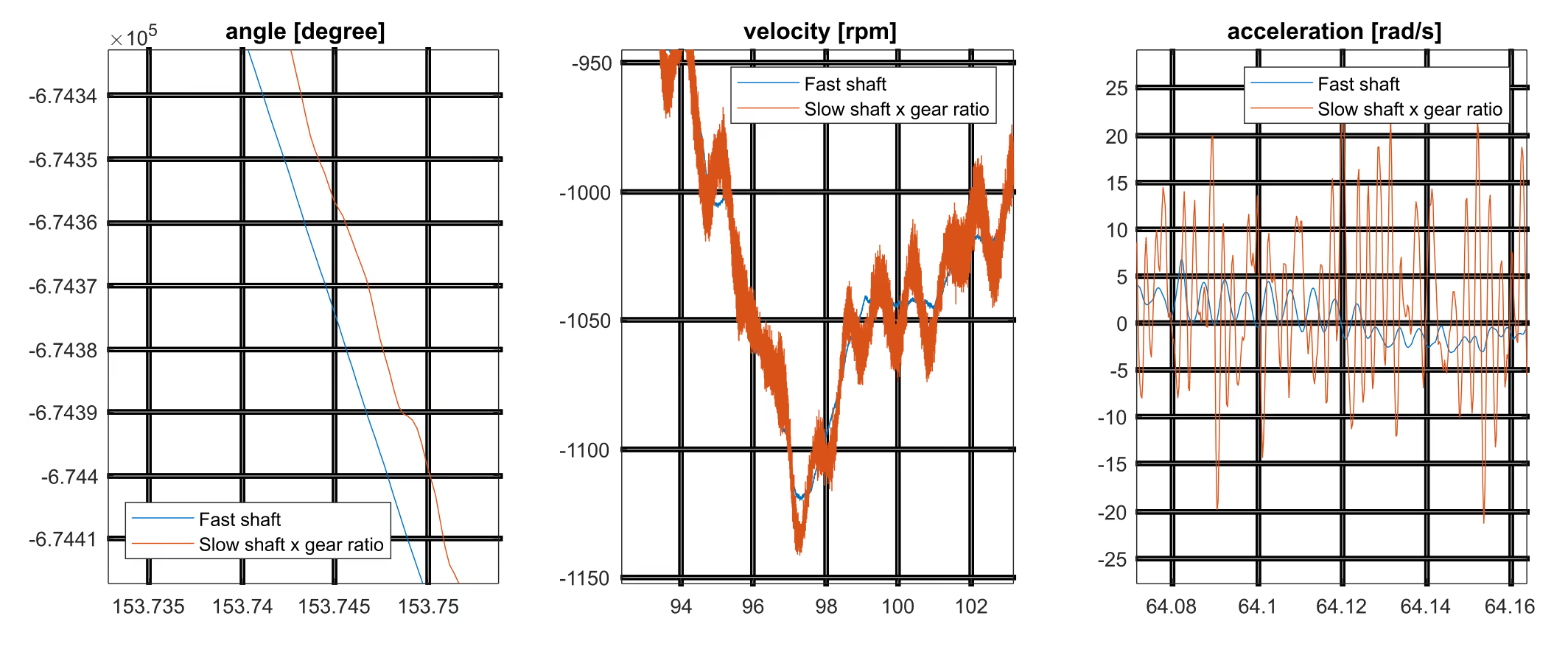
To directly compare the behavior of the slow shaft and the high-speed shaft, the signals were scaled using the gear ratio. This made it possible to:
- Overlay signals from different shafts
- Visually and analytically compare their dynamic behavior
As expected, scaling causes vibration amplitudes on the slow shaft to appear significantly larger. However, this also clearly shows the dynamics of both shafts. This kind of insight is extremely valuable when identifying which gearbox stage is degrading and how faults propagate through the drivetrain.
A Powerful Tool for Predictive Maintenance
What ultimately stands out from this demonstration is how well the solution fits real-world industrial needs:
- Ultra-fast installation enables rapid deployment
- No alignment effort removes practical barriers
- High-resolution angle, speed, and acceleration unlock advanced diagnostics
- Angle-dependent analysis reveals early-stage damage
- Rich feature space supports condition monitoring and predictive maintenance
By combining ease of use with high-quality data, ACCBIT enables engineers and researchers to move faster, from measurement to insight, without compromising accuracy.
Conclusion
This demonstration at LMSD Leuven Mechatronic System Dynamics, KU Leuven clearly shows that high-end gearbox instrumentation can be done in a very efficient fashion.
With ACCBIT, mounting takes only minutes, while the resulting data opens the door to deep, angle-resolved insight into gearbox health - making it a powerful enabler for modern predictive maintenance workflows.
.jpeg)